Refrigeratori industriali LNEYA Produttore Fornitore


Why is it dangerous to use an enamel reactor?
The enamel reaction kettle is a composite product made by lining the inner surface of a steel container with glass containing high silica, which is firmly adhered to the metal surface after being burned at a high temperature. Therefore, it has the dual advantages of glass stability and metal strength, and is an excellent corrosion-resistant device. Glass-lined reactors are widely used in chemical, petroleum, pharmaceutical, pesticide, food and other industries, and are ideal reaction vessels for hydrolysis, neutralization, crystallization, mixing, and emulsification.
The enamel layer of the enamel reaction kettle is easy to burst when it is cold and hot. Because the enamel layer is sintered on the surface of the enamel reaction kettle, and the enamel layer will melt when it exceeds 200 degrees Celsius, so the temperature of the material in the kettle is not allowed to exceed 200 degrees Celsius, so the enamel kettle has a temperature resistance limit of 200 degrees Celsius, and the temperature resistance rapidly becomes cold. Shock <110℃, thermal shock <120℃. For example, the reaction temperature of the enamel reaction kettle is 160 °C, and the jacket of the reaction kettle is passed through the steam of 6-7 kg pressure. At this time, it is suddenly switched to the cooling water of 10 °C. The temperature difference exceeds 150 °C, the temperature difference is too large, and the enamel reaction kettle is very Easy to burst. This is the time to need a heating circulator, first use 80°C water to cool the material to about 100°C, and then switch to 10°C cooling water, which can greatly increase the service life of the enamel reactor. When the material is fed, the temperature difference between the material temperature and the kettle body temperature is too large, and the steam is too strong when heating, and the cooling is too rapid, which can also cause the porcelain to explode.
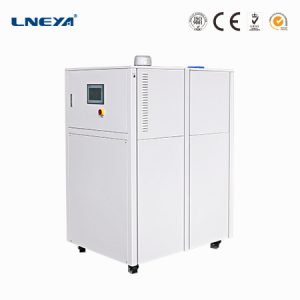
Typical applications of SUNDI series of LNEYA refrigeration and heating temperature control systems: dynamic constant temperature control of cold and heat sources such as high pressure reactors, double-layer glass reactors, enamel reactors, etc., constant temperature control of cold and heat sources of microchannel reactors; small constant temperature control systems, distillation systems temperature control, etc. High temperature cooling technology can directly cool down from 300 °C [because only the heat transfer medium in the expansion chamber is in contact with oxygen in the air (and the temperature of the expansion tank is between room temperature and 60 degrees), it can reduce the heat transfer medium being oxidized and reduced. Risk of absorbing moisture from the air.
Raccomandazioni correlate
-
Perché le camere a temperatura e umidità costanti hanno bisogno di unità di raffreddamento ad acqua?
1408Constant temperature and humidity chamber need water cooling units mainly for the following key reasons: Accurate temperature and humidity control: Water cooling units can provide efficient and accurate temperature regulation capabilit...
Visualizza dettagli -

Punti di attenzione delle apparecchiature dei produttori di apparecchiature per cicli ad alta e bassa temperatura per laboratorio
1711In laboratorio viene utilizzata un'ampia gamma di strumenti sperimentali. Quando gli strumenti sperimentali sono in funzione, sono inseparabili dalle apparecchiature di riscaldamento a circolazione ad alta e bassa temperatura del dispositivo di refrigerazione. Che cosa deve essere ...
Visualizza dettagli -
Quali sono i requisiti di installazione dei refrigeratori per litografia?
1756In order to ensure the reliable and normal operation of the chiller of the lithography machine and prevent the failure of the chiller caused by improper water distribution pipeline construction, the following matters should be paid attention to wh...
Visualizza dettagli -
Semiconductor refrigeration heating cycle air system test description
1604There are many test items in the refrigeration and heating circulating air system for semiconductors. So, how much do users know about out-of-channel testing? The out-of-channel test of the cooling and heating circulating air system for semiconduc...
Visualizza dettagli