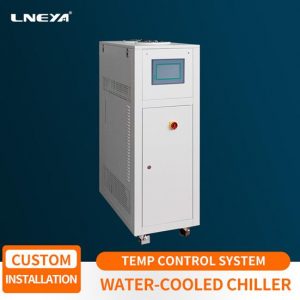
Refrigeratori industriali LNEYA Produttore Fornitore


Configuration form of circulating heating unit for laboratory
The standard model of the circulating heating unit for LNEYA laboratory is: SUNDI, the temperature range is from room temperature to minus 120 degrees Celsius, and the capacity can be divided into 5L, 10L, 20L, 30L, 40L, 50L, 80L, 100L, larger capacity equipment needs to be provided by the user Parameter requirements and experimental programs, customers can customize according to this information.
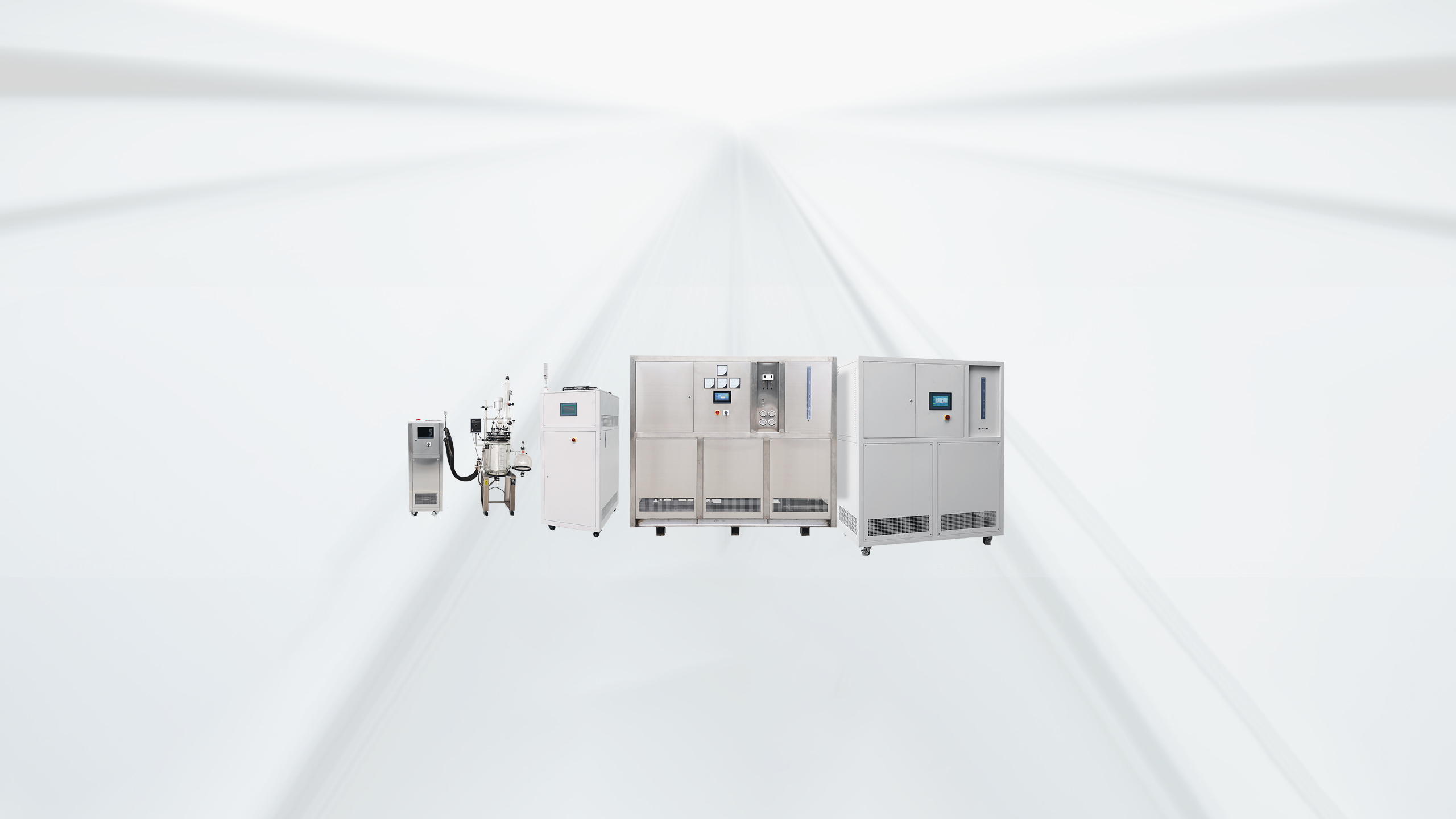
Basic configuration of circulating heating unit for laboratory:
1. Closed circulation system: Circulation devices with closed loops such as cooling coils and insulating sleeves.
2. Water-cooled chiller: The size of the chiller is adjusted according to the capacity of the equipment itself. Fans cannot be used to dissipate heat, which has little impact on the environment. It is suitable for use in dust-free laboratories without air conditioning and ventilation equipment. The refrigeration system has a delay. The components of heating, over-current protection and other devices are all imported products to ensure the quality and service life of the equipment.
3. High-pressure pump: The piping is longer, generally 1-3 meters (adjusted according to the actual situation), which can carry out long-distance cyclic transportation smoothly.
4. Shell and inner liner: stamped and welded with high-density corrosion-resistant materials. The interior can be filled with solutions such as tap water and ethanol, and the key parts are made of stainless steel (SUS304).
5. Circulating medium: silicone oil, water, ethanol, absolute ethanol, etc.
6. Computer control: The entire system provides microcomputer control, including host and software (genuine/cracked version), capable of high-precision control, and superior overall performance. All operations can be operated by buttons on the computer or touch screen, which is simple and intuitive. The PID system eliminates external factors that affect temperature regulation and reduces equipment errors.
We analyze the principles and methods of circulating heating unit cooling in the laboratory. The circulating heat transfer medium is different. Generally, direct cooling is generally used, while the circulating heating unit in laboratory mostly adopts indirect cooling. A plate heat exchanger or oil cooler is installed inside, and the heat medium and cooling water source in the system exchange heat in the heat exchanger to reduce the temperature of the medium.
The temperature of the circulating heating unit used in the laboratory cannot be lowered. Generally, we conduct inspection and maintenance from the following aspects:
1. The cooling solenoid valve is damaged: it is necessary to check whether the solenoid valve coil can work normally, if it is damaged, it needs to be replaced; the panel does not output a cooling signal, carefully check the circuit or use the component replacement method to check.
2. Circuit failure circuit: Check the circuit part of the system, the cooling water inlet or outlet pipeline is blocked: check whether the valve in the cooling water pipeline is fully opened, and ensure that the flow and pressure of the cooling water are sufficient, and the heating contactor is stuck, Always heating: observe the pull-in state of the contactor, and worsen damaged electrical parts.
If the temperature of the circulating heating unit in the laboratory cannot be lowered, in addition to troubleshooting the above-mentioned possible causes of failure, we also need to check whether the cooling plate is replaced or the cooling exchanger is blocked.
The advantage of using indirect cooling is that it has high temperature control accuracy and strong adaptability. It can be applied to the temperature control of the circulating heating unit in the laboratory. Since the heat transfer medium is cooled first, the cooling impact on the temperature control equipment is relatively small. Of course, the disadvantage is that the cooling rate is relatively slow, and the price is more expensive than direct cooling.
Raccomandazioni correlate
-

Applicazione e principio di funzionamento del refrigeratore ad acqua
1435Applicazione e principio di funzionamento del refrigeratore raffreddato ad acquaIl refrigeratore raffreddato ad acqua è un tipo di frigorifero industriale a bassa temperatura LNEYA di Wuxi Guanya. Un singolo compressore può raggiungere i -152 gradi Celsius di raffreddamento e refrigerazione. Potenza dell'apparecchiatura,...
Visualizza dettagli -
What cooling unit is compatible with data center liquid cooling?
1448Data center liquid cooling usually matches a variety of cooling equipment to achieve efficient heat management and ensure that servers and IT equipment operate within a safe operating temperature range. Cooling unit for data center l...
Visualizza dettagli -
Powertrain test cooling system-chiller maintenance
2065The powertrain test cooling system-chiller is one of the cooling systems. It has the characteristics of higher application efficiency and lower total energy consumption, and has generally been favored by many companies. However, no matter what kin...
Visualizza dettagli -
Soluzione del problema di perdita interna del frigorifero ad alta temperatura LNEYA
1817La configurazione dei refrigeratori ad alta temperatura di diversi produttori è diversa. La configurazione dei frigoriferi ad alta temperatura di Wuxi Guanya (LNEYA) è tutta acquistata dal marchio, utilizzando un sistema di tubazioni completamente chiuso, ma alcuni...
Visualizza dettagli