Refrigeratori industriali LNEYA Produttore Fornitore


Cosa fare in caso di rumore prodotto dai refrigeratori industriali per il raffreddamento e il riscaldamento?
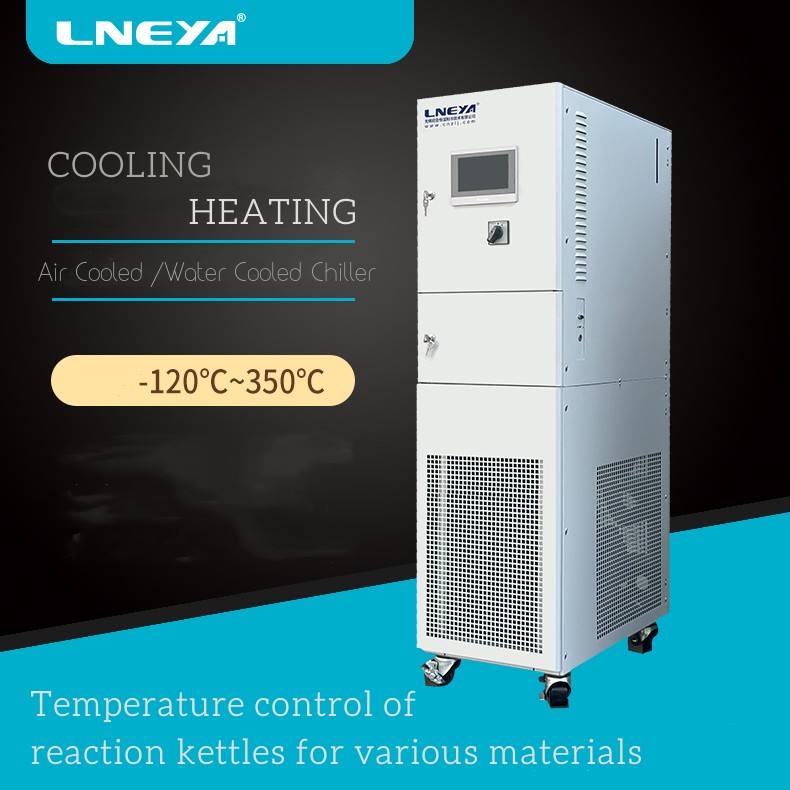
The industrial cooling and heating temperature control equipment adopts a PID algorithm temperature control system to accurately adjust the temperature based on the detected temperature and the set temperature value, improving the drawbacks of traditional manual control of the reaction kettle.
1. The industrial cooling and heating temperature control equipment, the chiller circulating pump, converts electrical energy into mechanical energy to promote the liquid phase circulation of the heat transfer oil, and transfers heat to the reaction kettle. The heat transfer oil exchanges with the materials in the reaction kettle and then returns to the oil heater, where it is heated again under the pressure of the pump and enters the next cycle. Through repeated cycles, heat is transferred and transported, heated and cooled, or the temperature of the reactor is maintained to meet the temperature requirements required by the production process.
2. When high noise occurs during the operation of the industrial cooling and heating temperature control equipment, the chiller needs to be inspected and promptly addressed if any problems are found. The internal components of the industrial grade cold and hot temperature control thermostat are excessively worn, such as the wear and tear of the cylinder body and valve plate of the plunger pump, as well as the wear and tear of the matching parts between the plunger and the plug hole, causing serious internal leakage in the pump. When the pump outputs high-pressure and low flow oil, flow pulsation will occur, causing high noise.
3. The pump valve plate is also one of the important components that can easily cause noise. Industrial cooling, heating, and temperature control equipment. During use, the water chiller may shorten the unloading groove and change the unloading position due to surface wear or oil sludge deposition at the opening of the unloading groove, resulting in oil trapping and higher noise.
4. When air is mixed into the cold water oil of industrial cooling and heating temperature control equipment, it is easy to form cavitation phenomenon in its high-pressure zone, which spreads in the form of pressure waves, causing oil oscillation and causing cavitation noise in the system.
Raccomandazioni correlate
-

Cosa determina il prezzo di un circolatore per la refrigerazione e il riscaldamento di un marchio?
1598Il prezzo del circolatore di refrigerazione e riscaldamento del marchio è determinato principalmente dalle tre parti principali delle materie prime, dei costi di produzione e dei costi tecnici, che influenzano la successiva quotazione. La composizione del circolatore frigorifero...
Visualizza dettagli -
-
Temperature conditions of new energy vehicle batteries
1452When automobile manufacturers continue to improve battery life to overcome the driver's mileage anxiety, the energy density of the large batteries installed is also gradually increasing, which means that the temperature monitoring function of the...
Visualizza dettagli -
Temperature control and chillers in oxidation diffusion process
1248The oxidation diffusion process is a key step in semiconductor manufacturing. It is mainly used to form precise oxide layers and doping, and has extremely strict requirements for temperature control. In this process, the chiller, as an imp...
Visualizza dettagli
![Meet on December 16-18 [CPHI] Shanghai New Inte...](https://www.lneya.com/wp-content/uploads/2023/05/3-3-1-300x150.jpg "Meet on December 16-18 [CPHI] Shanghai New Inte...")