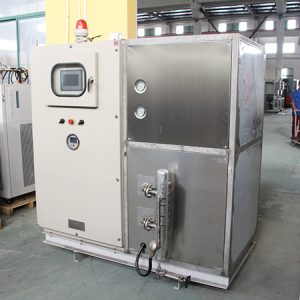
Refrigeratori industriali LNEYA Produttore Fornitore


Qual è il legame tra temperatura e reazione chimica?
The chemical reaction can produce more stable products, and then as the temperature is released, the energy before the component reaction is released.
On the other hand, the components of the reaction may produce different products, depending on the additional energy they have available in the form of temperature.
Temperature will not only change the amount of movement of the molecules involved so that they can mix better, but also change the angle of connection between the molecules or the position of the electrons, making it easier for them to form bonds. All reactions can be carried out above a certain temperature. However, before the correct temperature, the reactants are more likely to decompose.
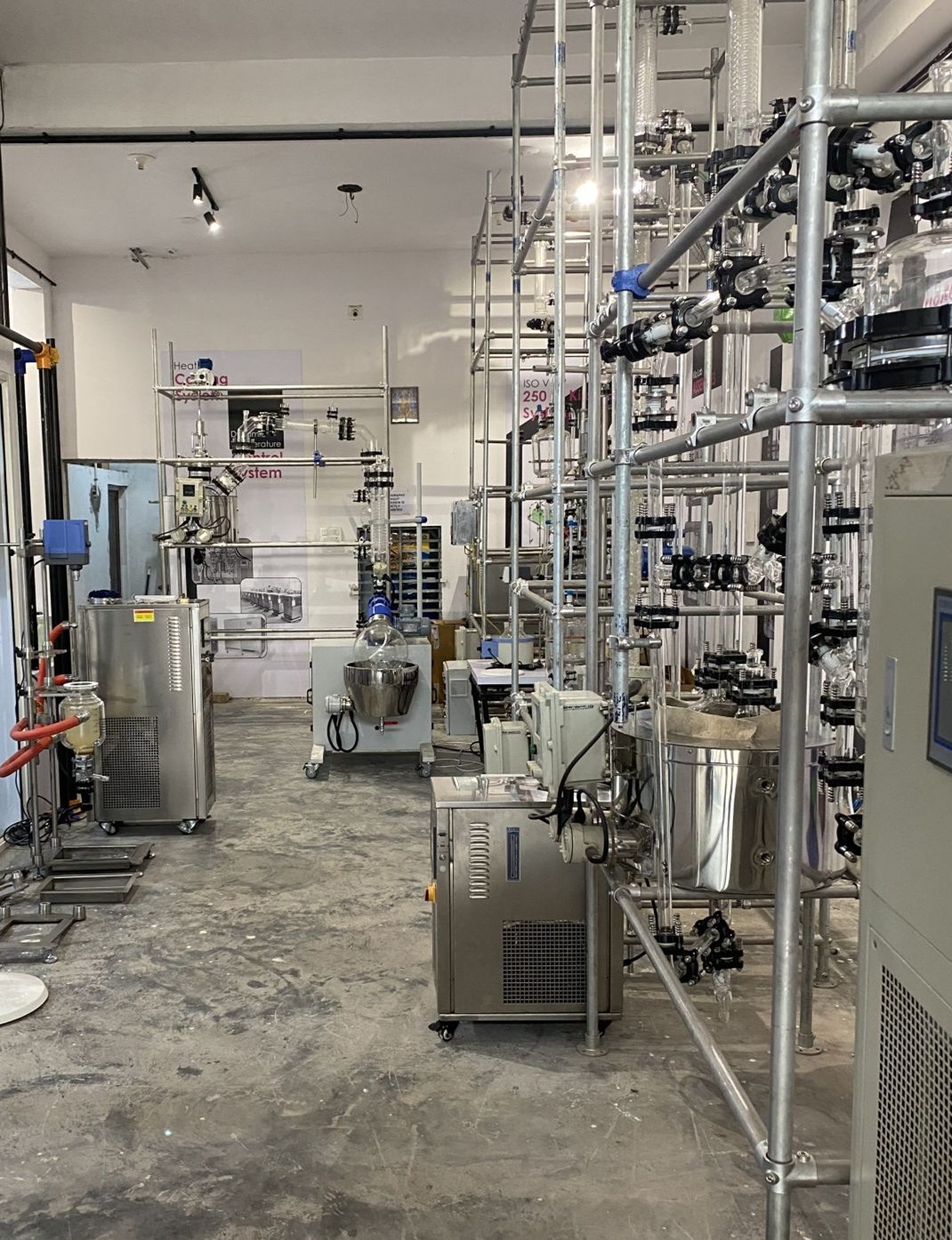
For almost all chemical reactions, the rate increases with increasing temperature. The fundamental reason is that at higher temperatures, more molecules in the reaction will have enough energy to overcome the activation energy “blocking” the reaction. Under low temperature conditions, the heat generated during the reaction can be better released, so that the chemical components can react more fully without producing undesirable products. This is why the temperature of the product may be lower than the temperature of the reactants in the endothermic reaction. The reason is that endothermic reactions are those reactions that require heat (we need heat) to react. The energy of the reactants is relatively small, so we provide energy to make the reaction happen. Therefore, all energy (heat) is consumed to carry out the reaction, and the temperature of the product may be lower.
Raccomandazioni correlate
-

Descrizione del fabbisogno di olio di refrigerazione dell'unità di recupero dei gas di scarico organici
2084Il dispositivo di recupero dei gas di scarto organici è leggermente diverso per i diversi gas. Il dispositivo di recupero dei gas di scarto organici LNEYA e il dispositivo di recupero a condensazione dei gas vocs funzionano secondo i principi della condensazione e dell'adsorbimento. La refrigerazione...
Visualizza dettagli -
Hydraulic system cooling and heating temperature control system
1217The application of cooling and heating temperature control system in hydraulic system is very critical, especially in occasions where precise temperature control is required. This system can ensure that the hydraulic oil is kept within the...
Visualizza dettagli -
Quali sono i vantaggi e gli svantaggi dei circolatori per il riscaldamento a gasolio?
1750Il circolatore di riscaldamento ad olio a conduzione termica adotta una struttura a circuito completamente chiuso per agire direttamente sull'energia termica al mezzo riscaldato.I suoi vantaggi sono: (1) Grazie al continuo rinnovamento della superficie di trasferimento del calore, la perdita di calore è ridotta; (2)...
Visualizza dettagli -
Unità di controllo della temperatura del processo di produzione e di test dei semiconduttori
1440Refrigeratore di processo per test sui semiconduttori LNEYA
Visualizza dettagli