Refrigeratori industriali LNEYA Produttore Fornitore


Perché esiste il dispositivo di controllo del sistema di trasferimento di calore dell'olio coke?
Nel dispositivo di controllo dell'olio di trasferimento di calore, l'olio di trasferimento di calore viene utilizzato per il controllo della temperatura di raffreddamento e riscaldamento. Se non è uguale a quello dell'LNEYA, l'uso del circuito completamente chiuso può influire sulla formazione di alcune cokizzazioni, che...
In the heat transfer oil control system device, three main chemical reactions occur in the heat transfer process: thermal oxidation reaction, thermal cracking and thermal polymerization. Coking occurs from thermal oxidation reactions and thermal polymerization reactions. The thermal polymerization reaction occurs because the heat transfer oil is heated during the operation of the heating system, and the reaction generates macromolecular high-boiling substances such as condensed aromatic hydrocarbons, colloids and asphaltenes, which are gradually deposited on the surface of the heater and the pipeline to form coking.
The thermal oxidation reaction of the heat transfer oil is mainly caused by the heat transfer oil in the expansion tank of the open heating system contacting the air or participating in the circulation, and the reaction generates low-molecular or high-molecular acidic components such as alcohol, aldehyde, ketone, acid, etc., and further generates Glue, asphaltene and other viscous substances, then form coking; thermal oxidation is caused by abnormal conditions, once it occurs, it will accelerate thermal cracking and thermal polymerization, so that the viscosity increases rapidly, heat transfer efficiency decreases, causing overheating and furnace tube Coking. The resulting acid can also cause corrosion and leakage of equipment.
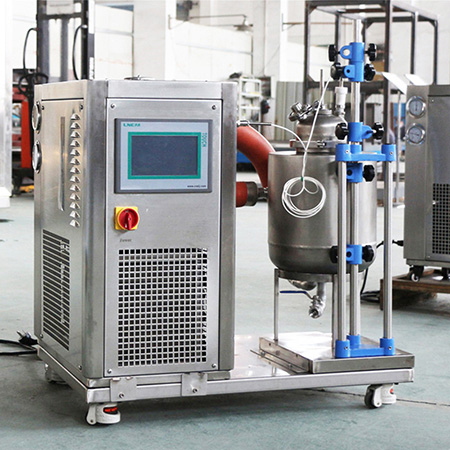
The heat transfer oil control system device heat transfer oil will form a heat insulation layer during use, resulting in a decrease in heat transfer coefficient, an increase in exhaust gas temperature, and an increase in fuel consumption. On the other hand, since the temperature required for the production process remains unchanged, The heating temperature rises sharply, causing cracks, causing serious accidents such as equipment and operator personal injury.
In the heat transfer oil control system device, if the heat transfer oil has a coking failure, the heat transfer oil control system device will be unavailable, and the heat transfer oil control system device is required to perform certain maintenance work.
(This article is from the source network. If there is any infringement, please contact LNEYA for deletion, thank you.)
Raccomandazioni correlate
-

Hybrid car battery test equipment cooling capacity description
1578Due to insufficient insulation thickness of the hybrid vehicle battery test equipment and pipeline or damage to the insulation layer, the loss of cooling capacity is increased, which affects the cooling effect. In the operation of the hybrid vehic...
Visualizza dettagli -
Quali sono le caratteristiche del sistema di riscaldamento del reattore?
1244Wuxi Guanya LNEYA reactor heating system The liquid circulation of the whole system is closed, the system has an expansion vessel, the expansion vessel and the liquid circulation are adiabatic, do not participate in the liquid circulation, only th...
Visualizza dettagli -
Tips on how to save energy for enterprises using industrial chiller
1607Nowadays, energy conservation has been advocated, and power consumption has always been a concern for everyone. Everyone knows that industrial equipment consumes electricity. For many chemical material manufacturing enterprises, the pressure of th...
Visualizza dettagli -
Good-Quality Liquid High&Low Temperature Impact Environment Chamber
2162When customers choose a liquid high and low-temperature impact environmental chamber for sale, first of all, they need to have a clear understanding of its use and characteristics.Functions of liquid high and low-temperature impact environmental c...
Visualizza dettagli