Refrigeratori industriali LNEYA Produttore Fornitore


A cosa bisogna prestare attenzione quando si aggiunge refrigerante a un refrigeratore raffreddato ad acqua
In our life, we believe that everyone is
very familiar with refrigeration. In the central air conditioning and
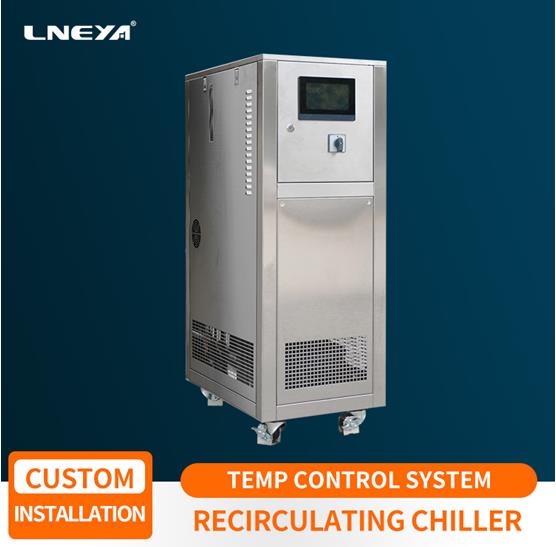
industrial production process cooling industry, small water-cooled chillers is
more common. This unit is composed of a compressor in the fuselage, a
horizontal shell and tube condenser, an evaporator, a thermal expansion valve,
and some related parts. Under the cooperation of these auxiliary parts, the
overall small water cooled chiller is compact in structure, convenient in
operation and control, and is popular among the public in the market.
For refrigeration systems that do not have
a high pressure reservoir and a low pressure vapor-liquid separator, the
control of refrigerant charge is particularly important. Because the
refrigeration system is a condenser and also acts as a high-pressure reservoir,
the refrigerant is stored in the condenser, and the condenser is cooled. The
heat dissipation area is reduced and the condensing pressure is increased,
resulting in a decrease in cooling capacity.
For the control of the refrigerant charge
of such small water-cooled chillers, the following methods are followed during
the filling process:
First, touch the temperature of the
condenser casing.
The upper outlet of the condenser outlet is
heated above the outlet, and the outlet below the outlet is cool. (There is a
description of the high temperature exhaust of the compressor in the inside.
The cooling indicates that the small water-cooled chillers is a liquid space.)
Second, look at the inspiratory pressure.
Corresponding to the temperature of the
refrigerant water in the evaporator. (That is, corresponding to the evaporation
temperature.)
Third, look at the compressor return pipe
temperature.
The high-temperature unit return pipe
should be cooled and dew, but it can be dew condensation to the compressor
return valve; the low-temperature unit return pipe should be frosted, but the
frost can be connected to the compressor return valve. If condensation or frost
builds up on the compressor casing, liquid refrigerant will enter the
crankcase, causing the compressor to run back and cause liquid
problem.
The above is a partial analysis of our
LNEYA technicians for water-cooled chillers. Regarding the specific use of our
water-cooled chillers, you can contact us sales@lneya.com for more detailed
instructions.
Raccomandazioni correlate
-

Descrizione del fabbisogno di olio di refrigerazione dell'unità di recupero dei gas di scarico organici
2086Il dispositivo di recupero dei gas di scarto organici è leggermente diverso per i diversi gas. Il dispositivo di recupero dei gas di scarto organici LNEYA e il dispositivo di recupero a condensazione dei gas vocs funzionano secondo i principi della condensazione e dell'adsorbimento. La refrigerazione...
Visualizza dettagli -
Hot and cold dynamic constant temperature control equipment cryopump installation points
1754The performance of each component in the cold and heat source dynamic constant temperature control equipment is different. We must make full use of each accessory to make the equipment run better. The cryopump is one of the main accessories, and i...
Visualizza dettagli -
New energy automobile motor comprehensive test system
1771When the LNEYA new energy vehicle motor integrated test system is running, the control panel settings are required. At the time of setting, if the user does not know how to use it, you can check the manual for use. The indicator of the new energy ...
Visualizza dettagli -
Uso e manutenzione del sistema di controllo della temperatura in laboratorio/bioingegneria
15351. Read the equipment manual carefully before use, get familiar with the operation process and key instructions, and operate in strict accordance with the conditions specified in the manual. 2. When moving the laboratory/bioengineering temperatur...
Visualizza dettagli