 Refrigeratori industriali LNEYA Produttore Fornitore


What Medical Imaging Machines Need a Chiller
Medical imaging equipment continuously generates significant heat during operation. Whether it’s an MRI, CT, or PET system, overheating can lead to image distortion, shortened equipment lifespan, or even downtime. To avoid costly overheating, hospitals are turning to refrigeratori to provide timely cooling for these devices.
MRI (Magnetic Resonance Imaging) Systems
MRI systems use superconducting magnets. These magnets must be kept at extremely low temperatures to maintain their superconducting properties. If the temperature rises even slightly, it could cause a loss in magnet functionality, leading to distorted images and system failure. A thermal chiller is essential for keeping the temperature stable and ensuring that the MRI machine works as intended.
CT (Computed Tomography) Scanners
CT scanners are widely used for taking detailed cross-sectional images of the body. The X-ray tubes in these machines generate significant heat, especially during long scanning sessions. If this heat isn’t dissipated fast enough, the tube life shortens and image artifacts appear.
A chiller keeps the X-ray tube oil or coolant loop within safe limits, often between 15°C and 30°C. In many CT suites, chillers are located in equipment rooms to reduce vibration and noise. Some hospitals even add secondary cooling circuits for high throughput facilities, where scanners operate almost non-stop throughout the day.
PET and SPECT Systems
PET and SPECT imaging rely on sensitive detectors that convert gamma rays into electrical signals. These detectors, along with associated amplifiers, generate heat that must be removed to prevent signal drift. Stable cooling is what ensures image uniformity and accurate quantification.
Chillers in PET systems typically maintain 5°C to 15°C temperature ranges with tight tolerance. When cooling is interrupted, detectors warm up unevenly, calibration drifts, and image data becomes unreliable.
Ultrasound Systems (High-Power Models)
Most ultrasound machines use natural convection or small fans. But for high-power or long-duration systems, such as 3D imaging or therapeutic ultrasound, air cooling isn’t enough. The transducers and amplifiers can overheat during extended scanning sessions. Overheating can damage the transducers or the power supply, leading to system failure or poor image quality.
Linear Accelerators and X-Ray Equipment
Linear accelerators are used in radiation therapy, while X-ray equipment is used for diagnosing a variety of conditions. Both of these systems produce a significant amount of heat during operation. Their RF power sources and target assemblies demand continuous cooling to maintain beam stability and patient safety.
How a Chiller Protects Medical Imaging Equipment
In medical imaging, temperature is invisible but critical. Every circuit board, magnet, and detector performs best within a narrow thermal range. A chiller keeps all of these parts in balance.
It circulates a temperature-controlled fluid through the system, absorbing heat where it forms and carrying it back to the condenser for release.
Without reliable cooling, systems slow down, drift, or shut off unexpectedly. With it, the equipment delivers clear, repeatable results for years.
Types of Chillers Used in Medical Imaging
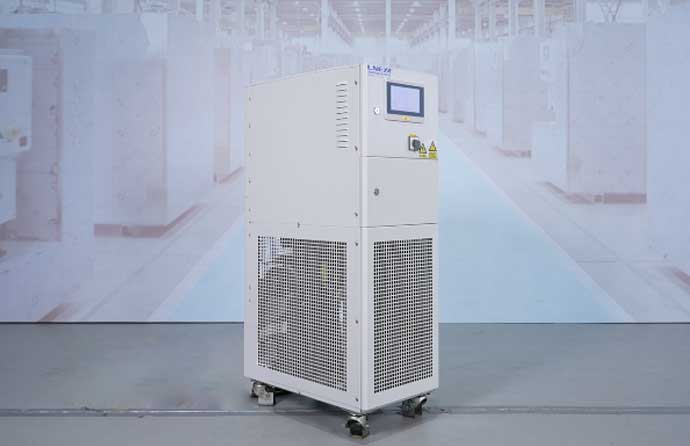
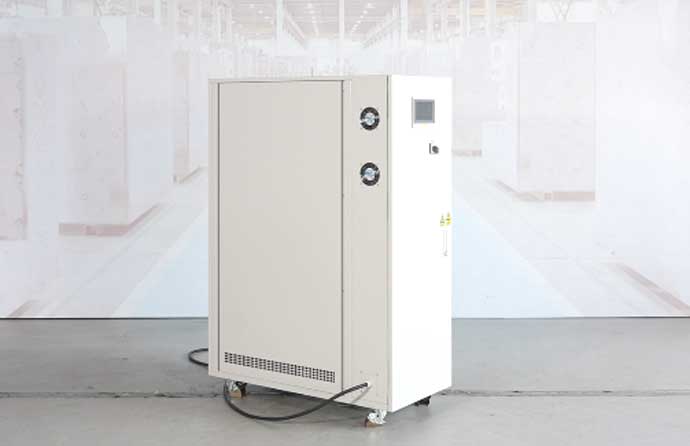
Air-Cooled Chillers
These are the most common type used in hospitals. They transfer heat to the ambient air and are easy to install. Air-cooled chillers are ideal for smaller imaging centers or facilities without access to water supply lines. They require minimal maintenance and are typically quieter than you might expect.
Water-Cooled Chillers
Water-cooled units handle higher loads and are often used in large hospitals where multiple machines share a centralized cooling system. They provide excellent efficiency and maintain tighter temperature control. When space allows, they’re the preferred choice for continuous 24/7 operation.
Chiller a ricircolo
Recirculating chillers are compact, self-contained units designed to cool one specific imaging system. They are perfect for ultrasound or PET applications where individual temperature control is critical. These units are easy to integrate and service, and they minimize cross-contamination between systems.
Low-Temperature Chillers
Some imaging technologies, especially superconducting MRI systems, require ultra-low coolant temperatures. Low-temperature chillers deliver precise cooling even below freezing, often using specialized fluids and multi-stage refrigeration designs. Their stability ensures that critical components stay within exact specifications.
LNEYA Medical Cooling Solutions
LNEYA has customized chillers of various types and performance levels for numerous hospitals and biological research institutes. Whatever equipment you need cooled, we can provide you with a reliable cooling system.

Blog recenti
- Chiller Components and Refrigeration Fundamentals Guides
- Chiller Types and Selection Guides
- How Does a Peltier Cooler Work
- Peltier Chiller vs. Compressor Chiller
- What Is a Peltier Chiller
- OEM vs Aftermarket Chiller Spare Parts
- Chiller Surge
- Chiller Cooling Capacity Units
Catalogo
- Dicembre 2025
- Novembre 2025
- Ottobre 2025
- Settembre 2025
- Agosto 2025
- Luglio 2025
- Giugno 2025
- Maggio 2025
- Marzo 2025
- Febbraio 2025
- Gennaio 2025
- Dicembre 2024
- Novembre 2024
- Ottobre 2024
- Settembre 2024
- Agosto 2024
- Luglio 2024
- Giugno 2024
- Maggio 2024
- Aprile 2024
- Marzo 2024
- Febbraio 2024
- Settembre 2023
- Luglio 2023
- Giugno 2023
- Maggio 2023
- Gennaio 2023
Tag
refrigeratore raffreddato ad aria refrigeratore Installazione di un refrigeratore Chiller Maintenance chiller refrigerant refrigeratori Congelatore a freddo refrigeratore di raffreddamento sistema di raffreddamento e riscaldamento cooling system sistema di controllo dinamico della temperatura chiller ad alta efficienza energetica chiller antideflagrante congelatore circolatore di riscaldamento refrigeratore industriale refrigeratori industriali raffreddamento industriale congelatore industriale frigorifero industriale reattore a camicia refrigeratore da laboratorio refrigeratore a bassa temperatura notizie refrigeratore d'olio refrigeratore di processo Prozesskühlung reattore refrigeratore raffreddamento del reattore raffreddamento del reattore riscaldamento riscaldamento del reattore raffreddamento circolatore refrigerato refrigeratore a vite refrigeratore per semiconduttori refrigeratore di prova per semiconduttori sundi tcu controllo della temperatura camera di prova termostato refrigeratore a bassissima temperatura refrigeratore di prova per veicoli refrigeratore d'acqua refrigeratore raffreddato ad acqua
Contatto
Chiller correlati


CONTATTO
TEL:
EMAIL:
WeChat & WhatsApp:

Wechat QR

Hai una domanda o hai bisogno di un preventivo? Compila il modulo qui sotto e il nostro team ti risponderà entro 24 ore.

