 Refrigeratori industriali LNEYA Produttore Fornitore


What Makes a Chiller High Precision
Some people wonder why certain chillers cost more than others. Engineers often explain that it usually comes down to precision. A high precision chiller does more than just cool. It keeps the temperature stable even when the load or ambient conditions change.
This stability protects production accuracy, ensures reliable test data, and prevents heat drift that could damage equipment.
Cos’è un chiller ad alta precisione?
A high precision chiller maintains process fluid temperature within a very tight tolerance, usually within ±0.1°C. It looks similar to a standard industrial chiller, but its internal design focuses on accuracy.
The cooling loop, compressor, sensors, and control algorithm work together to react instantly to load changes. These chillers are often used in semiconductor plants, medical facilities, and laboratories where temperature accuracy is critical.
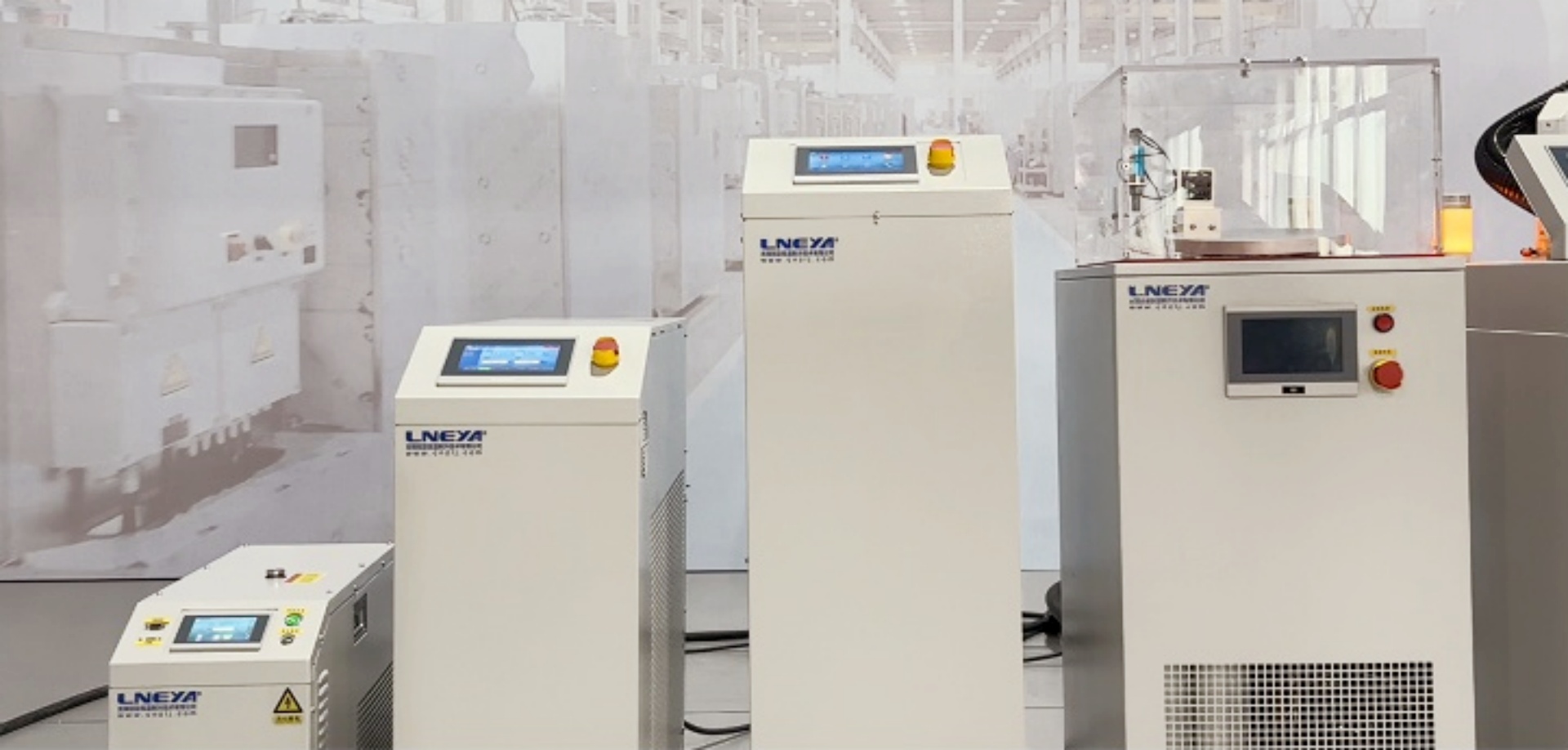
Features of a High Precision Chiller
Precise Temperature Control System
The heart of any high precision chiller is its control system. Most chillers use PID or PLC-based control logic to compare the actual fluid temperature with the setpoint. Then they adjust compressor speed, expansion valve position, and pump output.
The control loop runs continuously and doesn’t wait for large deviations before acting. When heat load increases, it smoothly ramps up cooling. When the load drops, it slows down without overshooting. This keeps the temperature steady and prevents spikes.
Some advanced systems also include adaptive tuning. They learn process behavior and automatically fine-tune responses over time.
High Performance Refrigeration Components
Accurate cooling depends on stable refrigeration hardware. The compressor must respond quickly and deliver consistent capacity. Scroll, variable-speed, or inverter compressors are common choices because they allow fine output adjustment.
The expansion valve also plays a major role. Electronic expansion valves control refrigerant flow more precisely than mechanical ones, helping the chiller maintain a tight temperature window.
Evaporators e condensers are designed with optimized surface areas for even heat transfer. In some models, plate heat exchangers replace shell-and-tube designs to improve response speed and minimize dead zones.
Uniform Heat Transfer and Fluid Management
A precision chiller needs a steady fluid flow. Uneven circulation or trapped air can create local hot spots and inaccurate readings.
That is why the circulation pump must be carefully matched to the system. Variable-speed pumps maintain stable pressure and flow even when process demand changes. Inside the loop, insulation and high-quality piping materials help reduce heat gain or loss.
Some systems use bypass lines to maintain constant flow when the main process is paused. Others include buffer tanks to absorb sudden temperature swings. Small design details like these have a major impact on performance.
Temperature Stability and Fast Response
Precision means more than holding a setpoint. It also means reacting fast when something changes.
A well-designed chiller detects even a tiny rise in return water temperature and compensates immediately. The control system coordinates compressor output, refrigerant flow, and water circulation within milliseconds. This quick response keeps the process within tolerance without overshoot or oscillation.
Thermal mass, fluid volume, and insulation all influence response speed and stability. How these elements are designed makes the real difference between a precision chiller and a standard one.
High Quality Sensors and Monitoring
You can’t control what you can’t measure. A high precision chiller relies on accurate temperature and pressure sensors placed at key points in the system, usually on the outlet, return line, and refrigerant circuit.
High-resolution digital sensors allow the control logic to make fast, precise adjustments. In addition, modern chillers often connect to PLCs or IoT platforms for remote monitoring. Operators can track performance, log data, and detect problems before they turn into failures. Good monitoring is key to high uptime and predictable maintenance.
Applications of High Precision Chillers
Semiconductor Wafer Processing
Semiconductor manufacturing demands temperature stability within fractions of a degree. During wafer etching, coating, or lithography, even a slight drift can change line width or cause defects.
Precision chillers maintain stable temperatures for CMP tools, etchers, and vacuum chambers. They help maintain high yields and prevent costly scrap.
Laser and Optical Systems
Lasers create concentrated heat in small areas. Without proper cooling, beam alignment and wavelength can shift. Precision chillers keep laser heads and optical components at stable temperatures to ensure consistent beam quality. You can find them in medical lasers, cutting machines, and scientific instruments.
Pharmaceutical Reactors and Incubators
Pharmaceutical and biotech processes depend on strict temperature control to ensure correct chemical reactions and biological growth.
Precision chillers regulate jacketed reactors, fermenters, and incubators so reactions take place under the right conditions. This improves batch quality and repeatability.
Medical Imaging and Laboratory Equipment
RISONANZA MAGNETICA, CT, and X-ray systems all need precise thermal management to protect sensitive electronics and maintain image quality. In laboratories, instruments like mass spectrometers and electron microscopes rely on stable cooling to prevent drift and calibration errors.
Precision Molding and Extrusion Processes
In plastic injection or extrusion processes, mold temperature directly affects product dimensions and surface finish. Precision chillers ensure even mold temperatures, reducing defects and shortening production cycles.
The same applies to optical component manufacturing, where temperature changes can ruin surface flatness.
Customize Your High Precision Chiller
Every process has its own unique needs. That is why many users choose custom-built high precision chillers. At LNEYA, our engineers can design chillers specifically for your application. Talk with our technical team and we will help you create a system that performs perfectly under real-world conditions.
📞Phone:+86 189 1425 3067
🌐Website: https://www.lneya.com
✉️Fill out the form to receive a quote: https://www.lneya.com/contact

Blog recenti
- Chiller Components and Refrigeration Fundamentals Guides
- Chiller Types and Selection Guides
- How Does a Peltier Cooler Work
- Peltier Chiller vs. Compressor Chiller
- What Is a Peltier Chiller
- OEM vs Aftermarket Chiller Spare Parts
- Chiller Surge
- Chiller Cooling Capacity Units
Catalogo
- Dicembre 2025
- Novembre 2025
- Ottobre 2025
- Settembre 2025
- Agosto 2025
- Luglio 2025
- Giugno 2025
- Maggio 2025
- Marzo 2025
- Febbraio 2025
- Gennaio 2025
- Dicembre 2024
- Novembre 2024
- Ottobre 2024
- Settembre 2024
- Agosto 2024
- Luglio 2024
- Giugno 2024
- Maggio 2024
- Aprile 2024
- Marzo 2024
- Febbraio 2024
- Settembre 2023
- Luglio 2023
- Giugno 2023
- Maggio 2023
- Gennaio 2023
Tag
refrigeratore raffreddato ad aria refrigeratore Installazione di un refrigeratore Chiller Maintenance chiller refrigerant refrigeratori Congelatore a freddo refrigeratore di raffreddamento sistema di raffreddamento e riscaldamento cooling system sistema di controllo dinamico della temperatura chiller ad alta efficienza energetica chiller antideflagrante congelatore circolatore di riscaldamento refrigeratore industriale refrigeratori industriali raffreddamento industriale congelatore industriale frigorifero industriale reattore a camicia refrigeratore da laboratorio refrigeratore a bassa temperatura notizie refrigeratore d'olio refrigeratore di processo Prozesskühlung reattore refrigeratore raffreddamento del reattore raffreddamento del reattore riscaldamento riscaldamento del reattore raffreddamento circolatore refrigerato refrigeratore a vite refrigeratore per semiconduttori refrigeratore di prova per semiconduttori sundi tcu controllo della temperatura camera di prova termostato refrigeratore a bassissima temperatura refrigeratore di prova per veicoli refrigeratore d'acqua refrigeratore raffreddato ad acqua
Contatto
Chiller correlati


CONTATTO
TEL:
EMAIL:
WeChat & WhatsApp:

Wechat QR

Hai una domanda o hai bisogno di un preventivo? Compila il modulo qui sotto e il nostro team ti risponderà entro 24 ore.

