 Refrigeratori industriali LNEYA Produttore Fornitore


Tipi di chiller da laboratorio
Knowing the main types of refrigeratori da laboratorio makes choosing easier. It helps you match the cooling method, temperature range, and circulation medium with your process needs instead of guessing or overspending.
Learn more:
What Is a Laboratory Chiller
Quale tipo di chiller è migliore per l'uso in laboratorio
1. Classification by Cooling Method
Air-Cooled Laboratory Chillers
Air-cooled chillers are the most common in small and mid-sized labs. They release heat directly into the room through a fan and condenser. Installation is simple, and there’s no need for an external water source, which makes them easy to relocate or integrate into existing setups.
Our engineers often recommend air-cooled chillers for instruments like rotary evaporators, spectrometers, and smaller reactors. They perform best in well-ventilated spaces. When ventilation is poor, the room temperature can climb, slightly reducing efficiency. But overall, they’re reliable, low-maintenance, and budget-friendly.
If your lab values convenience and portability more than long continuous duty, air-cooled models usually offer the best balance.

Water-Cooled Laboratory Chillers
Water-cooled chillers use a dedicated water source or cooling tower to remove heat. This design keeps the lab cooler and allows higher efficiency during heavy workloads.
They’re common in large facilities, cleanrooms, or continuous test environments. These chillers maintain steady operation even when running 24/7. The trade-off is a more complex installation that requires plumbing connections and water quality control.
For labs where uptime and temperature stability are critical, our team often prefers water-cooled systems. They stay consistent even under changing ambient conditions, which is key for precision applications.

2. Classification by Temperature Range
Standard Temperature Chillers (5°C to 35°C)
Most lab chillers work within this standard range and handle general equipment cooling. They keep vacuum pumps, analytical instruments, and photometers operating steadily. The focus is on consistent, repeatable cooling rather than pushing extreme performance.
Standard units are easy to maintain and cost-effective. They’re ideal for labs where ambient temperature doesn’t fluctuate much. Our engineers usually install these systems in teaching labs, research institutes, and general production lines.
Low-Temperature and Ultra-Low-Temperature Chillers
Some experiments push cooling far below freezing. Low-temperature chillers can reach –40°C, and ultra-low types can go beyond –80°C using cascade refrigeration systems or special refrigerants.
These systems appear in semiconductor testing, cryogenic preservation, and chemical reaction control. They must handle quick heat loads and still keep temperature drift within tight limits.

3. Classification by Circulation Medium
Water Chillers
Water chillers are the simplest and cleanest option. They use pure water or deionized water as the cooling medium. Many optical or medical systems rely on them because even trace oil or ion contamination can damage sensors or coatings.
Their heat transfer performance is excellent, but water can corrode metal over time, so we often recommend stainless steel or coated internal surfaces for long-term use.
Chiller a glicole
Glycol-water mixtures are common in labs needing protection from freezing. They’re perfect for environmental chambers or cooling lines where temperature dips below 0°C. The glycol prevents ice from forming inside the circuit.
Refrigeratori d'olio
Oil chillers use heat thermal oil instead of water. This allows a much wider operating range, especially for processes involving both heating and cooling. They’re widely used in material testing, chemical synthesis, and test sui cicli di temperatura.
Oil doesn’t corrode or evaporate easily, which means stable performance and less maintenance. Our engineers like to pair oil chillers with reactors that need to stay accurate across a broad range, such as –40°C to +150°C.
4. Classification by Function or Application
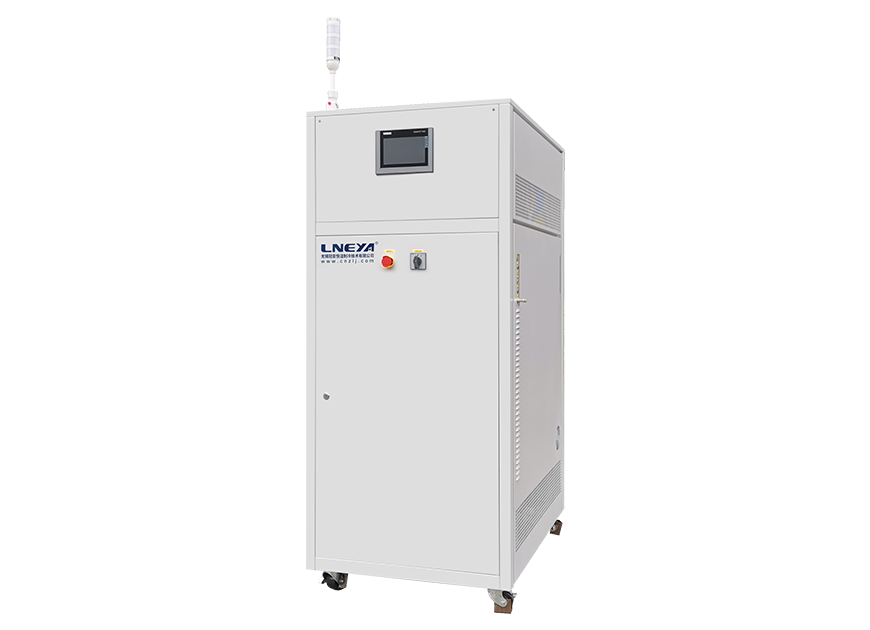
Chiller a ricircolo
Recirculating chillers are the workhorses of modern labs. They move coolant continuously through the system while holding a precise temperature. Many come with digital controls that allow fine-tuning for sensitive instruments.
They’re versatile and appear in nearly every kind of lab, from university research to semiconductor testing lines. When clients ask for a “general-purpose chiller,” this is usually the first option we recommend.
Refrigeratori criogenici
Cryogenic chillers take cooling into the deep cold range. They rely on multi-stage compressors or liquid nitrogen assistance to reach sub-zero extremes. These chillers are essential for cryogenic storage, superconductivity research, and ultra-low temperature calibration.
Portable Laboratory Chillers
Portable chillers are small, compact, and surprisingly powerful for their size. Labs use them for flexible setups, pilot projects, or instruments that move between workstations. We often suggest them for startup labs or R&D teams that need versatility more than capacity.
Explosion-Proof Chillers
For labs handling flammable chemicals or volatile solvents, explosion-proof chillers provide peace of mind. These units have sealed electrical components, anti-spark fans, and reinforced housings.
Our engineers always verify compliance before installation, especially for chemical processing or pilot plant environments. In these cases, precision cooling must never come at the cost of safety.

5. How to Choose the Right Type for Your Lab
Choosing the right laboratory chiller starts with understanding your process, not the catalog. Think about three main things: the temperature range you need, the environment where the chiller will sit, and the fluids your system can handle safely.
If your lab runs around-the-clock with strict temperature tolerance, a water-cooled or oil-based unit is usually the right fit. If you want flexibility and easy setup, go for an air-cooled or portable type. For any high-risk material, explosion-proof design is a must.
Finding the Best Fit in LNEYA
Our engineers at LNEYA design chillers for real lab needs. We match models to process data, not just a product catalog. Whether the need is precision cooling for optics, stable loops for biotech, or deep cold for semiconductor testing, we configure systems to the lab conditions.
If you have process numbers ready, such as heat load, inlet and outlet temperature targets, our team can provide a free recommendation and a spec sheet.

Blog recenti
- Chiller Components and Refrigeration Fundamentals Guides
- Chiller Types and Selection Guides
- How Does a Peltier Cooler Work
- Peltier Chiller vs. Compressor Chiller
- What Is a Peltier Chiller
- OEM vs Aftermarket Chiller Spare Parts
- Chiller Surge
- Chiller Cooling Capacity Units
Catalogo
- Dicembre 2025
- Novembre 2025
- Ottobre 2025
- Settembre 2025
- Agosto 2025
- Luglio 2025
- Giugno 2025
- Maggio 2025
- Marzo 2025
- Febbraio 2025
- Gennaio 2025
- Dicembre 2024
- Novembre 2024
- Ottobre 2024
- Settembre 2024
- Agosto 2024
- Luglio 2024
- Giugno 2024
- Maggio 2024
- Aprile 2024
- Marzo 2024
- Febbraio 2024
- Settembre 2023
- Luglio 2023
- Giugno 2023
- Maggio 2023
- Gennaio 2023
Tag
refrigeratore raffreddato ad aria refrigeratore Installazione di un refrigeratore Chiller Maintenance chiller refrigerant refrigeratori Congelatore a freddo refrigeratore di raffreddamento sistema di raffreddamento e riscaldamento cooling system sistema di controllo dinamico della temperatura chiller ad alta efficienza energetica chiller antideflagrante congelatore circolatore di riscaldamento refrigeratore industriale refrigeratori industriali raffreddamento industriale congelatore industriale frigorifero industriale reattore a camicia refrigeratore da laboratorio refrigeratore a bassa temperatura notizie refrigeratore d'olio refrigeratore di processo Prozesskühlung reattore refrigeratore raffreddamento del reattore raffreddamento del reattore riscaldamento riscaldamento del reattore raffreddamento circolatore refrigerato refrigeratore a vite refrigeratore per semiconduttori refrigeratore di prova per semiconduttori sundi tcu controllo della temperatura camera di prova termostato refrigeratore a bassissima temperatura refrigeratore di prova per veicoli refrigeratore d'acqua refrigeratore raffreddato ad acqua
Contatto
Chiller correlati


CONTATTO
TEL:
EMAIL:
WeChat & WhatsApp:

Wechat QR

Hai una domanda o hai bisogno di un preventivo? Compila il modulo qui sotto e il nostro team ti risponderà entro 24 ore.

